Buy helixshop.eu ?
We are moving the project
helixshop.eu .
Are you interested in purchasing the domain
helixshop.eu ?
domain@kv-gmbh.de · 0541-91531010
Buy helixshop.eu ?
How do you draw and label a DNA molecule?
To draw a DNA molecule, start by drawing a long, twisted ladder shape with two parallel lines representing the sugar-phosphate backbone. Then, add horizontal lines connecting the two backbones to represent the nitrogenous bases. Label each base (adenine, thymine, cytosine, or guanine) on the appropriate line. Finally, label the 5' and 3' ends of the DNA molecule to indicate the directionality of the strands. **
Does each chromosome contain the entire DNA?
No, each chromosome does not contain the entire DNA. DNA is spread across all the chromosomes in a cell. In humans, there are 23 pairs of chromosomes, with each parent contributing one chromosome to each pair. This means that the DNA in a cell is distributed across all 46 chromosomes. Each chromosome contains a unique set of genes and regulatory elements that contribute to the overall genetic makeup of an organism. **

Similar search terms for How
Top-Angebote
Products related to How:
-
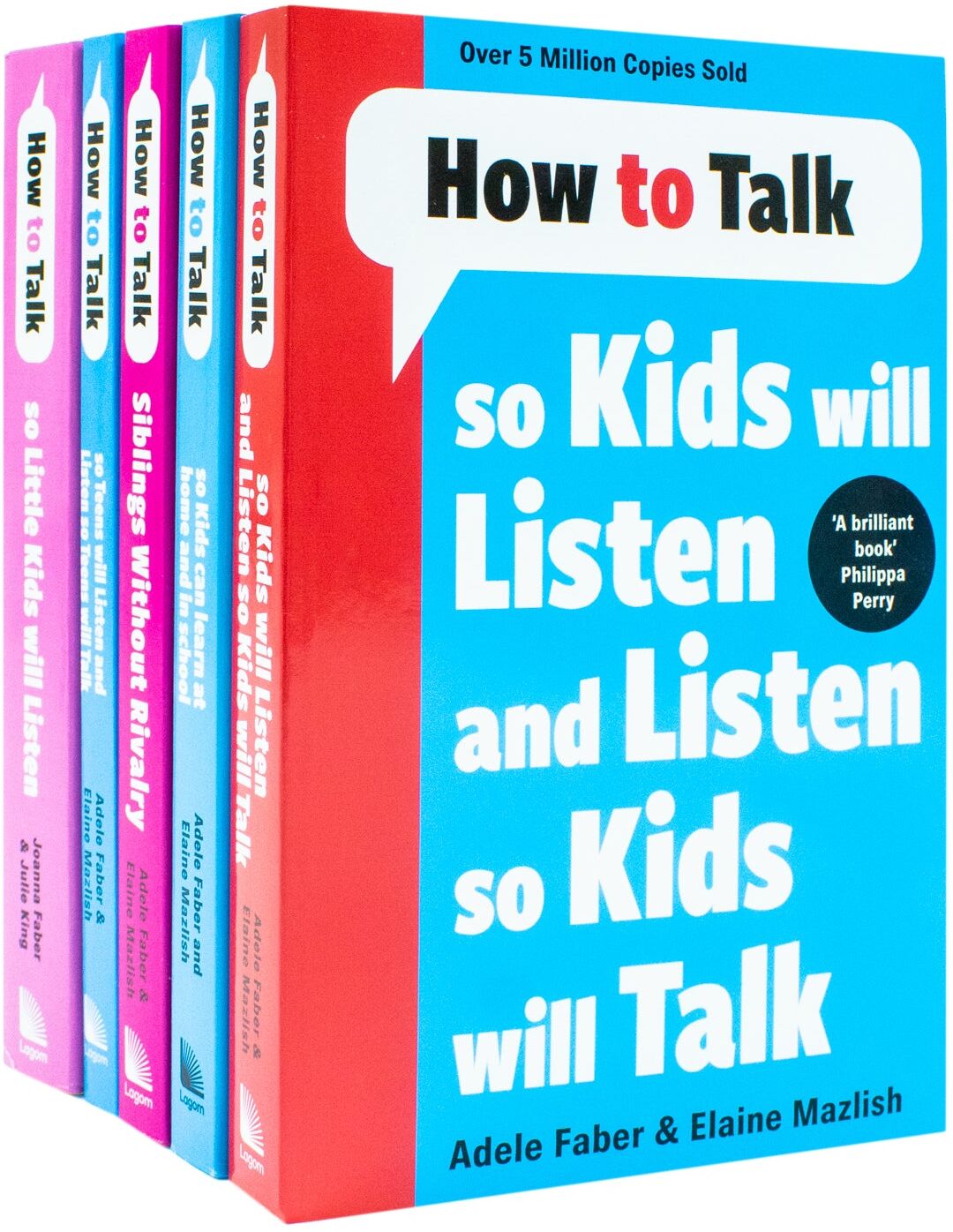
Piccadilly Press How To Talk Collection 5 Books Set How To Talk So Kids Will Listen How To Talk SeriesTitles In This Set: How to Talk So Kids Can Learn: At Home and in School How To Talk So Kids Will Listen and Listen So Kids Will Talk How to Talk So Teens Will Listen and Listen So Teens Will Talk How to Talk so Little Kids Will Listen: A Survival Guide to Life with Children Aged 2-7 Siblings Without Rivalry: How to Help Your Children Live Together So You Can Live Too How to Talk So Kids Can Learn: At Home and in SchoolFrom the widely-acclaimed HOW TO TALK series, leading parenting experts show how to motivate kids to learn. Using the unique communication strategies, down-to-earth dialogues, and cartoons that are the hallmark of their bestselling bookHow To Talk So Kids Will Listen and Listen So Kids Will TalkThe number one practical guide to making your family life less stressful and more rewarding.In this international bestseller, experts Adele Faber and Elaine Mazlish provide effective step by step techniques to help you improve and enrich your relationships with your children.How to Talk So Teens Will Listen and Listen So Teens Will TalkFrom curfews and cliques to sex and drugs, bestselling authors Faber and Mazlish give parents and teens the tools they need to communicate and navigate the often stormy years of adolescence. How to Talk so Little Kids Will Listen: A Survival Guide to Life with Children Aged 2-7From tantrums and food battles to anxieties and sleep issues. Parenting experts Julie King and Joanna Faber give insights and tried-and-tested strategies to navigate the everyday challenges of life with children aged 2-7.Siblings Without Rivalry: How to Help Your Children Live Together So You Can Live TooDiscover parenting experts Faber and Mazlish's tested and practical guidelines for how to cope with - and deflect - sibling rivalry. Full of humour and compassion, Siblings Without Rivalry challenges the idea that constant conflict between siblings is natural and unavoidable.The How to Talk 5 book collection is a fantastic series of books to help any parent with techniques on how to talk to their children and how to help their development. From parenting experts Adele Faber, Elaine Mazlish, Joanna Faber and Julie King, this set will guide anyone struggling to communicate with children and teens with anxieties, tantrums along with how to motivate and praise correctly. Related Products: Self Help Recovery Books16,99 £*Shipping: 2,99 £Secure redirect to the provider
-
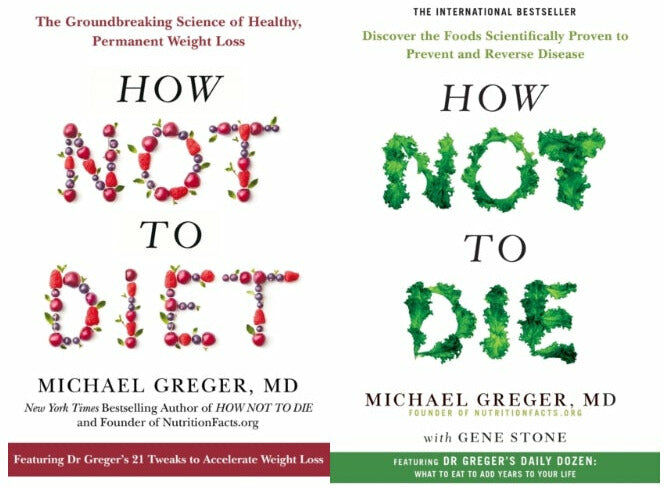
Pan Macmillan How Not To Die 2 Books Collection Set by Dr Michael Greger and Gene Stone ( How Not To Diet: The Groundbreaking Science of Healthy, Permanent Weight LHow Not To Die 2 Books Collection Set Dr Michael Greger and Gene Stone Title In This Set: How Not To Diet: The Groundbreaking Science of Healthy, Permanent Weight Loss, How Not To Die14,99 £*Shipping: 2,99 £Secure redirect to the provider
-
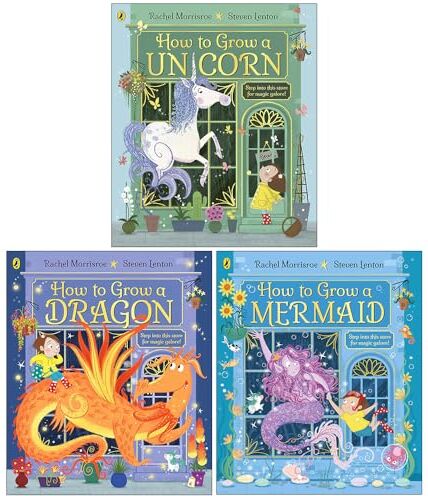
Puffin ltd How to Grow Series Collection 3 Books Set By Rachel Morrisroe (How to Grow a Unicorn, How to Grow a Dragon and How to Grow a Mermaid)How to Grow Series Collection 3 Books Set By Rachel Morrisroe (How to Grow a Unicorn, How to Grow a Dragon & How to Grow a Mermaid): How to Grow a Unicorn: A rollicking, rhyming read-aloud treat from wordsmith extraordinaire, debut author Rachel Morrisroe, and the ridiculously talented, bestselling Steven Lenton.Welcome to Mr Pottifer's Parlour of Plants: a magical shop with the most surprising plants you'll ever see! Sarah thinks she's discovered the perfect gift for her garden-loving grandma, but before you can say GARDEN FULL OF UNICORNS, things grow wildly out-of-hand! How to Grow a Dragon: A story that celebrates problem solving, kindness and resourcefulness.An unexpected delivery of dragodil seeds provides the perfect chance for Sarah and Mr Pottifer to grow helpful dragon pets for their customers - or does it? It turns out that these fiery dragons are not very well-behaved at all... and everything soon spirals into smoke-filled, out-of-control DRAGON CHAOS! Can Sarah's quick thinking and green fingers save the day? How to Grow a Mermaid: A new customer at the shop buys some mermaid seeds, and Sarah is only too happy to help him grow them. But when the plants are accidentally given too much sugar, their vines spread throughout the town, flooding the streets and causing a whole heap of MER-MAYHEM! Can Sarah and her new friend use their quick thinking and green fingers to save the day?19,99 £*Shipping: 2,99 £Secure redirect to the provider
-
BBC Books Alan Titchmarsh How to Garden: Small Gardens (How to Garden, 27)Successful gardens can be created in the smallest spaces, and in this inspiring and practical guide Alan Titchmarsh shows how to transform even the tiniest outdoor area into an attractive garden. With ideas for maximizing space and advice on garden design, planning and plant selection, this is the definitive handbook for anyone wanting to create a private haven in limited space. Ideas for front gardens, side passages, courtyards, balconies, rooftops and windowsills Tricks to make small spaces seem larger How to use every inch of space, including containers Easy-to-follow landscaping plans for all garden shapes and styles Guidance on growing vegetables, herbs and fruit in small plots2,67 £*Shipping: 1,99 £Secure redirect to the provider

-
How is the coding of DNA into mRNA carried out in genetics?
In genetics, the process of coding DNA into mRNA is carried out through a process called transcription. During transcription, an enzyme called RNA polymerase binds to a specific region of the DNA called the promoter and begins to unwind the DNA double helix. The RNA polymerase then reads the DNA sequence and synthesizes a complementary mRNA strand by adding nucleotides according to the base pairing rules (A with U, G with C, etc.). Once the mRNA strand is synthesized, it is processed and transported out of the nucleus to be translated into a protein by ribosomes. This process is essential for gene expression and the production of functional proteins in the cell. **
-
Why is the depicted DNA molecule only a model?
The depicted DNA molecule is only a model because it is a simplified representation of the complex structure of DNA. In reality, DNA is a three-dimensional molecule that twists and folds in intricate ways. The model shows the basic double helix structure of DNA, but it does not capture all the details and variations that exist in real DNA molecules. Additionally, the model may use colors or other visual aids to represent different components of DNA, which further emphasizes its simplified nature. **
-
What is the relationship between relative DNA content and chromosome set?
The relationship between relative DNA content and chromosome set is that the relative DNA content refers to the amount of DNA present in a cell, while the chromosome set refers to the number and type of chromosomes present in a cell. The relative DNA content is directly related to the chromosome set, as the amount of DNA in a cell is determined by the number and size of its chromosomes. For example, a cell with a diploid chromosome set will have twice the amount of DNA as a cell with a haploid chromosome set. Therefore, the relative DNA content and chromosome set are closely linked and influence each other. **
-
What is the difference between chromosome chromatid and DNA double strand?
A chromosome is a long, continuous strand of DNA that contains many genes, regulatory elements, and other nucleotide sequences. A chromatid is one half of a duplicated chromosome, which is joined to the other half by a centromere. DNA double strand refers to the structure of the DNA molecule, which consists of two complementary strands of nucleotides that are held together by hydrogen bonds. In summary, a chromosome is a long strand of DNA, a chromatid is one half of a duplicated chromosome, and a DNA double strand refers to the structure of the DNA molecule. **

How does genetics work?
Genetics is the study of genes, which are the units of heredity that are passed down from parents to offspring. Genes are made up of DNA, which contains the instructions for building and maintaining an organism. Each gene carries a specific set of instructions for a particular trait, such as eye color or height. These genes can be passed down from parents to their children, resulting in the inheritance of certain traits. Genetics also involves the study of how genes can be mutated or altered, leading to variations in traits within a population. **
How big is a chromosome?
A chromosome is a long, continuous strand of DNA that contains numerous genes. The size of a chromosome can vary widely between different species, but in humans, the largest chromosome, chromosome 1, is about 248 million base pairs long, while the smallest, chromosome 21, is about 46 million base pairs long. In physical terms, if we were to stretch out the DNA in a single human cell, the total length of all the chromosomes combined would be about 6 feet long. **
Top-Angebote
Products related to How:
-
Icon Books The Epigenetics Revolution - How Modern Biology Is Rewriting Our Understanding Of Genetics Disease..At the beginning of this century enormous progress had been made in genetics. The Human Genome Project finished sequencing human DNA. It seemed it was only a matter of time until we had all the answers to the secrets of life on this planet.6,95 £*Shipping: 2,99 £Secure redirect to the provider
-
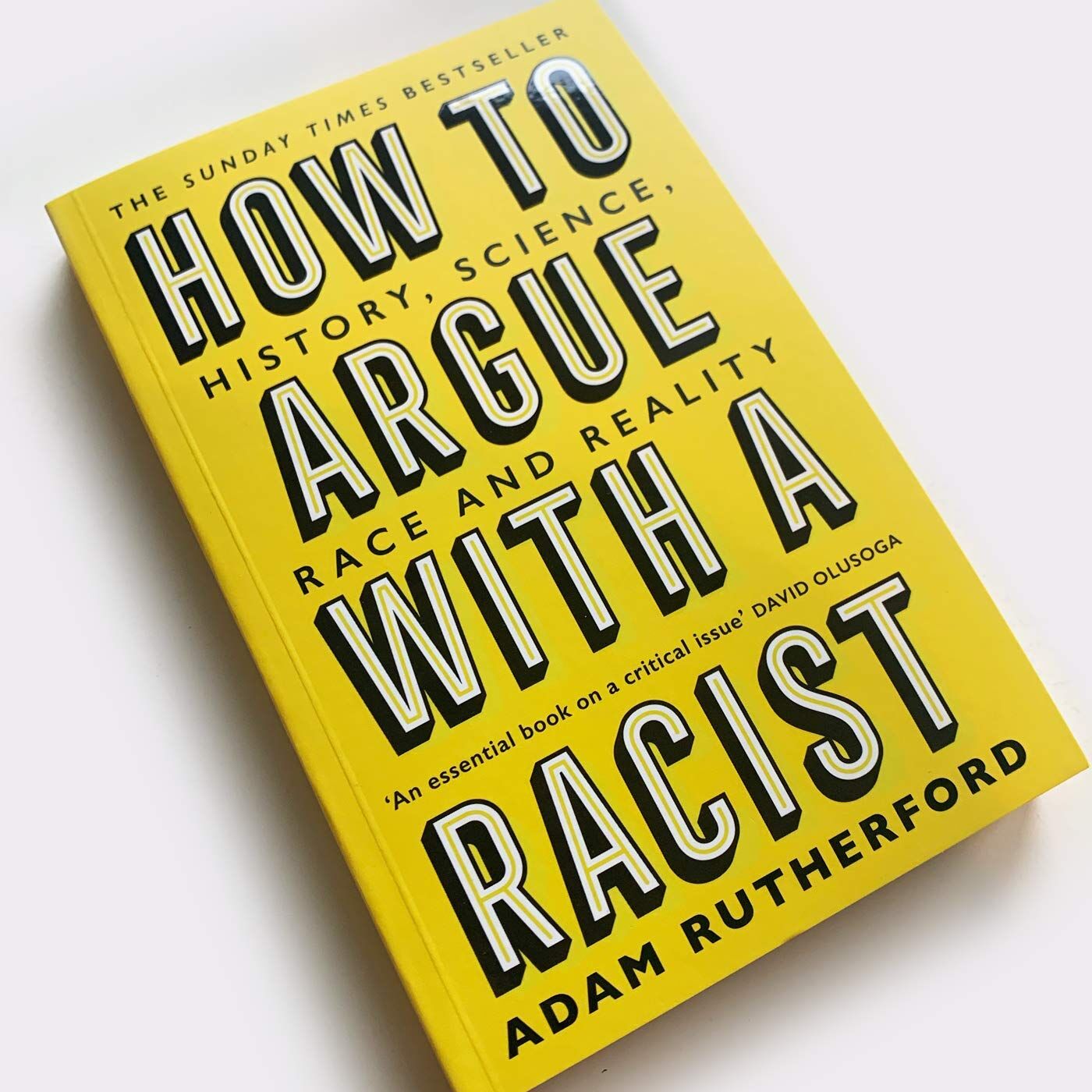
Orion How to Argue With a Racist by Adam Rutherford – Science, Race & Truth ExplainedRacist pseudoscience may be on the rise, but science is no ally to racists. Instead science and history can be powerful allies against bigotry, granting us the clearest view of how people actually are, rather than how we judge them to be. HOW TO ARGUE WITH A RACIST dismantles outdated notions of race by illuminating what modern genetics can and can't tell us about human difference. It is a vital manifesto for a twenty-first century understanding of human evolution and variation, and a timely weapon against the misuse of science to justify racism.3,99 £*Shipping: 1,99 £Secure redirect to the provider
-
Piccadilly Press How To Talk Collection 5 Books Set How To Talk So Kids Will Listen How To Talk SeriesTitles In This Set: How to Talk So Kids Can Learn: At Home and in School How To Talk So Kids Will Listen and Listen So Kids Will Talk How to Talk So Teens Will Listen and Listen So Teens Will Talk How to Talk so Little Kids Will Listen: A Survival Guide to Life with Children Aged 2-7 Siblings Without Rivalry: How to Help Your Children Live Together So You Can Live Too How to Talk So Kids Can Learn: At Home and in SchoolFrom the widely-acclaimed HOW TO TALK series, leading parenting experts show how to motivate kids to learn. Using the unique communication strategies, down-to-earth dialogues, and cartoons that are the hallmark of their bestselling bookHow To Talk So Kids Will Listen and Listen So Kids Will TalkThe number one practical guide to making your family life less stressful and more rewarding.In this international bestseller, experts Adele Faber and Elaine Mazlish provide effective step by step techniques to help you improve and enrich your relationships with your children.How to Talk So Teens Will Listen and Listen So Teens Will TalkFrom curfews and cliques to sex and drugs, bestselling authors Faber and Mazlish give parents and teens the tools they need to communicate and navigate the often stormy years of adolescence. How to Talk so Little Kids Will Listen: A Survival Guide to Life with Children Aged 2-7From tantrums and food battles to anxieties and sleep issues. Parenting experts Julie King and Joanna Faber give insights and tried-and-tested strategies to navigate the everyday challenges of life with children aged 2-7.Siblings Without Rivalry: How to Help Your Children Live Together So You Can Live TooDiscover parenting experts Faber and Mazlish's tested and practical guidelines for how to cope with - and deflect - sibling rivalry. Full of humour and compassion, Siblings Without Rivalry challenges the idea that constant conflict between siblings is natural and unavoidable.The How to Talk 5 book collection is a fantastic series of books to help any parent with techniques on how to talk to their children and how to help their development. From parenting experts Adele Faber, Elaine Mazlish, Joanna Faber and Julie King, this set will guide anyone struggling to communicate with children and teens with anxieties, tantrums along with how to motivate and praise correctly. Related Products: Self Help Recovery Books16,99 £*Shipping: 2,99 £Secure redirect to the provider
-
Pan Macmillan How Not To Die 2 Books Collection Set by Dr Michael Greger and Gene Stone ( How Not To Diet: The Groundbreaking Science of Healthy, Permanent Weight LHow Not To Die 2 Books Collection Set Dr Michael Greger and Gene Stone Title In This Set: How Not To Diet: The Groundbreaking Science of Healthy, Permanent Weight Loss, How Not To Die14,99 £*Shipping: 2,99 £Secure redirect to the provider
-
How do you draw and label a DNA molecule?
To draw a DNA molecule, start by drawing a long, twisted ladder shape with two parallel lines representing the sugar-phosphate backbone. Then, add horizontal lines connecting the two backbones to represent the nitrogenous bases. Label each base (adenine, thymine, cytosine, or guanine) on the appropriate line. Finally, label the 5' and 3' ends of the DNA molecule to indicate the directionality of the strands. **
-
Does each chromosome contain the entire DNA?
No, each chromosome does not contain the entire DNA. DNA is spread across all the chromosomes in a cell. In humans, there are 23 pairs of chromosomes, with each parent contributing one chromosome to each pair. This means that the DNA in a cell is distributed across all 46 chromosomes. Each chromosome contains a unique set of genes and regulatory elements that contribute to the overall genetic makeup of an organism. **
-
How is the coding of DNA into mRNA carried out in genetics?
In genetics, the process of coding DNA into mRNA is carried out through a process called transcription. During transcription, an enzyme called RNA polymerase binds to a specific region of the DNA called the promoter and begins to unwind the DNA double helix. The RNA polymerase then reads the DNA sequence and synthesizes a complementary mRNA strand by adding nucleotides according to the base pairing rules (A with U, G with C, etc.). Once the mRNA strand is synthesized, it is processed and transported out of the nucleus to be translated into a protein by ribosomes. This process is essential for gene expression and the production of functional proteins in the cell. **
-
Why is the depicted DNA molecule only a model?
The depicted DNA molecule is only a model because it is a simplified representation of the complex structure of DNA. In reality, DNA is a three-dimensional molecule that twists and folds in intricate ways. The model shows the basic double helix structure of DNA, but it does not capture all the details and variations that exist in real DNA molecules. Additionally, the model may use colors or other visual aids to represent different components of DNA, which further emphasizes its simplified nature. **
Similar search terms for How
-
Puffin ltd How to Grow Series Collection 3 Books Set By Rachel Morrisroe (How to Grow a Unicorn, How to Grow a Dragon and How to Grow a Mermaid)How to Grow Series Collection 3 Books Set By Rachel Morrisroe (How to Grow a Unicorn, How to Grow a Dragon & How to Grow a Mermaid): How to Grow a Unicorn: A rollicking, rhyming read-aloud treat from wordsmith extraordinaire, debut author Rachel Morrisroe, and the ridiculously talented, bestselling Steven Lenton.Welcome to Mr Pottifer's Parlour of Plants: a magical shop with the most surprising plants you'll ever see! Sarah thinks she's discovered the perfect gift for her garden-loving grandma, but before you can say GARDEN FULL OF UNICORNS, things grow wildly out-of-hand! How to Grow a Dragon: A story that celebrates problem solving, kindness and resourcefulness.An unexpected delivery of dragodil seeds provides the perfect chance for Sarah and Mr Pottifer to grow helpful dragon pets for their customers - or does it? It turns out that these fiery dragons are not very well-behaved at all... and everything soon spirals into smoke-filled, out-of-control DRAGON CHAOS! Can Sarah's quick thinking and green fingers save the day? How to Grow a Mermaid: A new customer at the shop buys some mermaid seeds, and Sarah is only too happy to help him grow them. But when the plants are accidentally given too much sugar, their vines spread throughout the town, flooding the streets and causing a whole heap of MER-MAYHEM! Can Sarah and her new friend use their quick thinking and green fingers to save the day?19,99 £*Shipping: 2,99 £Secure redirect to the provider
-
BBC Books Alan Titchmarsh How to Garden: Small Gardens (How to Garden, 27)Successful gardens can be created in the smallest spaces, and in this inspiring and practical guide Alan Titchmarsh shows how to transform even the tiniest outdoor area into an attractive garden. With ideas for maximizing space and advice on garden design, planning and plant selection, this is the definitive handbook for anyone wanting to create a private haven in limited space. Ideas for front gardens, side passages, courtyards, balconies, rooftops and windowsills Tricks to make small spaces seem larger How to use every inch of space, including containers Easy-to-follow landscaping plans for all garden shapes and styles Guidance on growing vegetables, herbs and fruit in small plots2,67 £*Shipping: 1,99 £Secure redirect to the provider
-
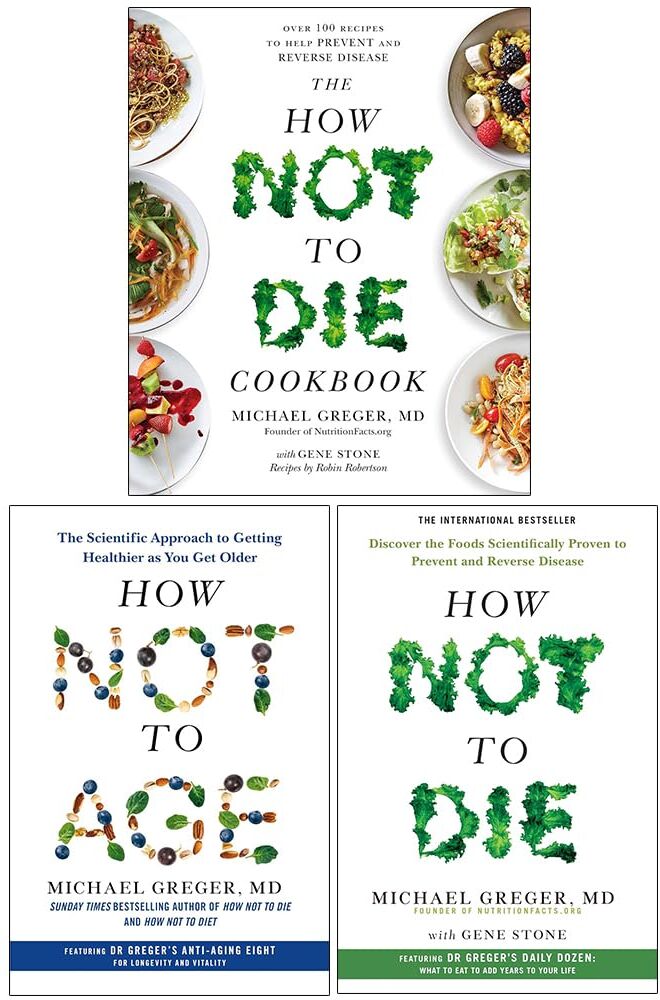
Bluebird/Pan ltd The How Not to Die Cookbook, How Not to Age and How Not to Die 3 Books Collection SetThe How Not to Die Cookbook, How Not to Age & How Not to Die 3 Books Collection Set: The How Not to Die Cookbook: Dr Michael Greger, founder of the wildly popular website NutritionFacts, takes his comprehensive, lifesaving science into the kitchen. Why suffer from disease and ill health when the right food is proven to keep you healthy, and without the side effects of drugs? We can avoid heart disease, cancer and our other biggest killers if we use food as medicine, and the How Not To Die Cookbook offers a sustainable and delicious guide to preparing and eating the foods that will prevent and reverse fatal diseases. How Not to Age: Dr Michael Greger digs into the top peer-reviewed anti-ageing research to deliver a complete and optimal guide with simple steps to extend your lifespan and slow the adverse effects of ageing.Inspired by the dietary and lifestyle patterns of the world’s centenarians and residents of ‘blue zone’ regions where people live the longest, Dr Greger presents easy, evidence-based ways to preserve the body functions that keep us feeling youthful, both physically and mentally. How Not to Die: How Not To Die examines each of the most common diseases to reveal what, how and why different foods affect us, and how increasing our consumption of certain foods and avoiding others can dramatically reduce our risk of falling sick and even reverse the effects of disease. It also shares Dr Greger's 'Daily Dozen' - the twelve foods we should all eat every day to stay in the best of health.20,95 £*Shipping: 2,99 £Secure redirect to the provider
-
DK The Science of Nutrition: Debunk the Diet Myths and Learn How to Eat Well for Health and HappinessA SUNDAY TIMES BESTSELLER --Is a vegan diet healthier? Should I try going low-carb? Is it always a bad idea to skip a meal? Are superfoods all they're cracked up to be? Is fat still bad for you? Can I eat to improve my chances of conceiving?Science of Nutrition cuts through the noise of conflicting diet advice with clear answers backed up by the very latest research. Recognising that there is no one-size-fits-all when it comes to nutrition, this ground-breaking book has the answers to all your food-related questions, covering every conceivable topic - from gut bacteria to weight management, to heart health and immune support, to vegan diets and intermittent fasting, and everything in between. With an accessible Q&A approach and informative graphics, this nutrition book will debunk popular food myths and diets, redefine nutrition in the modern world, and enable you to make informed decisions that are best suited to you, about what, when, and how to eat. The book's easily digestible and evidence-based advice empowers you to explore the benefits and importance of nutrition, alongside the downright misleading when it comes to the world of food and diet, and to equip yourself with the knowledge and confidence to assess and enhance your approach to nutrition9,99 £*Shipping: 2,99 £Secure redirect to the provider
-
What is the relationship between relative DNA content and chromosome set?
The relationship between relative DNA content and chromosome set is that the relative DNA content refers to the amount of DNA present in a cell, while the chromosome set refers to the number and type of chromosomes present in a cell. The relative DNA content is directly related to the chromosome set, as the amount of DNA in a cell is determined by the number and size of its chromosomes. For example, a cell with a diploid chromosome set will have twice the amount of DNA as a cell with a haploid chromosome set. Therefore, the relative DNA content and chromosome set are closely linked and influence each other. **
-
What is the difference between chromosome chromatid and DNA double strand?
A chromosome is a long, continuous strand of DNA that contains many genes, regulatory elements, and other nucleotide sequences. A chromatid is one half of a duplicated chromosome, which is joined to the other half by a centromere. DNA double strand refers to the structure of the DNA molecule, which consists of two complementary strands of nucleotides that are held together by hydrogen bonds. In summary, a chromosome is a long strand of DNA, a chromatid is one half of a duplicated chromosome, and a DNA double strand refers to the structure of the DNA molecule. **
-
How does genetics work?
Genetics is the study of genes, which are the units of heredity that are passed down from parents to offspring. Genes are made up of DNA, which contains the instructions for building and maintaining an organism. Each gene carries a specific set of instructions for a particular trait, such as eye color or height. These genes can be passed down from parents to their children, resulting in the inheritance of certain traits. Genetics also involves the study of how genes can be mutated or altered, leading to variations in traits within a population. **
-
How big is a chromosome?
A chromosome is a long, continuous strand of DNA that contains numerous genes. The size of a chromosome can vary widely between different species, but in humans, the largest chromosome, chromosome 1, is about 248 million base pairs long, while the smallest, chromosome 21, is about 46 million base pairs long. In physical terms, if we were to stretch out the DNA in a single human cell, the total length of all the chromosomes combined would be about 6 feet long. **
* All prices are inclusive of VAT and, if applicable, plus shipping costs. The offer information is based on the details provided by the respective shop and is updated through automated processes. Real-time updates do not occur, so deviations can occur in individual cases. ** Note: Parts of this content were created by AI.