Buy helixshop.eu ?
We are moving the project
helixshop.eu .
Are you interested in purchasing the domain
helixshop.eu ?
domain@kv-gmbh.de · 0541-91531010
Buy helixshop.eu ?
What is the iteration rule?
The iteration rule is a mathematical concept that defines how to generate the next term in a sequence or series based on the previous term. It is a formula or set of instructions that allows for the repetition of a process to create a pattern or progression. By following the iteration rule, one can continue to generate new terms in the sequence or series, allowing for the exploration of patterns and relationships within the data. **
What is a general iteration method?
A general iteration method is a mathematical technique used to solve equations or find the roots of a function. It involves repeatedly applying a specific formula or process to an initial guess in order to converge towards the solution. The process is typically iterative, meaning it is repeated until a certain level of accuracy is achieved. General iteration methods are widely used in numerical analysis and computational mathematics to solve a variety of problems. **

Similar search terms for Iteration
Top-Angebote
Products related to Iteration:
-
"""Laurent-Perrier Grand Siecle Iteration No. 26 with Gift Box Champagne - France""""""Grand Siècle was born from the vision of Bernard de Nonancourt: to recreate the perfect year, one that nature alone could never deliver. Iteration N°26 embodies this idea, crafted from a masterful blend of three outstanding years – 2012, 2008, and..."279,99 $*Shipping: 0,00 $Secure redirect to the provider
-
"""Laurent-Perrier Grand Siecle Iteration No. 24 (1.5 Liter Magnum) with Gift Box Champagne - France""""""Grand Siècle was born from the vision of Bernard de Nonancourt: to recreate the perfect year, one that nature alone could never deliver. Iteration N°24 embodies this idea, crafted from a masterful blend of three outstanding years – 2007, 2006, and..."679,99 $*Shipping: 0,00 $Secure redirect to the provider
-
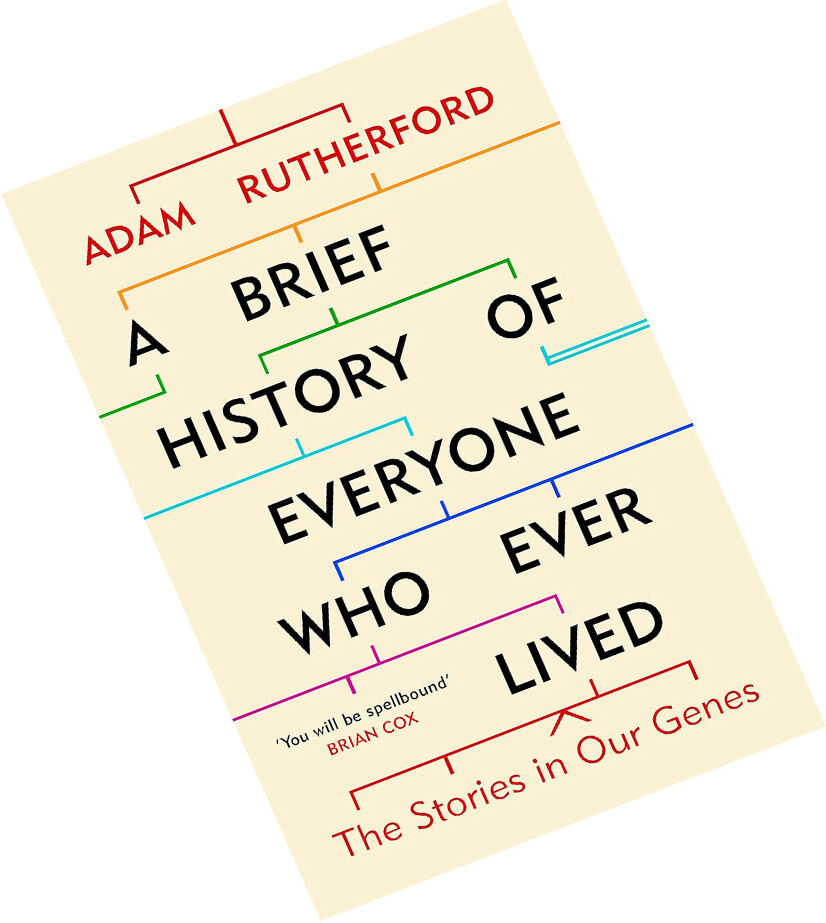
Weidenfeld & Nicolson A Brief History of Everyone Who Ever Lived by Adam Rutherford - Paperback - Popular Science Genetics BestsellerA Brief History of Everyone Who Ever Lived is a captivating exploration of what our DNA reveals about the shared story of humanity. Geneticist and broadcaster Adam Rutherford blends cutting-edge genetics with history to trace migration, disease, war, and love through the code written into every cell. This book is a tour through the expanding landscape of genetic science, showing how our genes encode the history of our species: births, deaths, disease, famine, migration, and countless generations of reproduction. Rutherford examines what genetics can tell us about Neanderthals and our own human history, making this a fascinating read for anyone curious about where we come from and what makes us human. Published by Weidenfeld & Nicolson, this paperback book is a record of an extraordinary journey, and every human genome is a testament to the shared story of our species.4,99 £*Shipping: 2,99 £Secure redirect to the provider
-
Orion Gene Eating: The Story of Human Appetite by Dr Giles Yeo - Paperback Popular Science Book on Genetics, Appetite & Diet MythsGene Eating: The Story of Human Appetite is a thought-provoking book by Dr Giles Yeo, a Cambridge geneticist. In this book, Yeo delves into the biology behind hunger, cravings, and weight gain, drawing on two decades of genetic research. He explores the genuine biological mechanisms, including hormones, brain signalling, and inherited genetic variation, that shape how hungry we feel and how our bodies store energy. This book offers a science-backed perspective on appetite, metabolism, and obesity, making it an essential read for anyone looking for clarity on these topics. Written by Dr Giles Yeo, a molecular geneticist, Gene Eating is a well-researched and insightful book that provides a deeper understanding of the complex issues surrounding human appetite.2,99 £*Shipping: 2,99 £Secure redirect to the provider



-
Why does the Picard iteration fail?
The Picard iteration can fail to converge if the fixed-point mapping is not a contraction mapping, meaning that it does not contract the distance between points in the space. This can happen if the mapping has regions of steep slope or if the initial guess is too far from the fixed point. In these cases, the iteration may not converge to the fixed point or may converge very slowly, making it impractical for practical use. Additionally, the Picard iteration may fail if the fixed-point mapping is not continuous or differentiable, as this violates the assumptions required for convergence. **
-
How does the fixed point iteration work?
Fixed point iteration is a method used to find the fixed point of a function, which is a value that does not change when the function is applied to it. The process involves repeatedly applying the function to an initial guess, and using the result as the next guess. This process continues until the difference between consecutive guesses is smaller than a specified tolerance. The fixed point iteration can be used to solve equations of the form x = g(x), where g(x) is a function. **
-
Is the intersection of interval iteration not empty?
No, the intersection of interval iteration is not empty. When two intervals are iterated, they will eventually converge to a common point, which will be the intersection point. This intersection point is not empty and represents the value where the two intervals meet after iteration. **
-
Can someone explain the fixed-point iteration to me?
Sure! Fixed-point iteration is a method used to find the fixed point of a function, which is a point where the function value is equal to the input value. The process involves repeatedly applying the function to an initial guess until the result converges to the fixed point. Mathematically, it can be represented as x_{n+1} = g(x_n), where g(x) is the function being iterated and x_n is the current approximation. Fixed-point iteration is commonly used in numerical analysis to solve equations and find roots of functions. **


How do you solve the fixed-point iteration method?
To solve the fixed-point iteration method, you first need to rearrange the equation you want to solve into the form \(x = g(x)\), where \(g(x)\) is a function that will help you find the solution. Then, you choose an initial guess for the solution, denoted as \(x_0\). Next, you iterate using the formula \(x_{n+1} = g(x_n)\) until the difference between consecutive approximations is smaller than a specified tolerance level. Finally, the last approximation obtained is the solution to the equation. **
How can you delay each iteration of a while loop using BukkitRunnable?
You can delay each iteration of a while loop using BukkitRunnable by scheduling the task to run asynchronously with a delay. Inside the while loop, you can create a new instance of BukkitRunnable and schedule it to run after a certain delay using the `runTaskLater` method. This will allow the while loop to continue iterating, but with a delay between each iteration. It's important to note that using a while loop with delays in BukkitRunnable should be done carefully to avoid performance issues and potential server lag. **
Top-Angebote
Products related to Iteration:
-
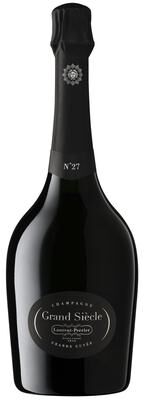
"""Laurent-Perrier Grand Siecle Iteration No. 27 Champagne - France""""""Grand Siècle was born from the vision of Bernard de Nonancourt: to recreate the perfect year, one that nature alone could never deliver. Iteration N°27 embodies this idea, crafted from a masterful blend of three outstanding years – 2015, 2013, and..."269,99 $*Shipping: 0,00 $Secure redirect to the provider
-
Laurent-Perrier Champagne Brut Grande Cuvée 'Grand Siècle Iteration n. 27'The Champagne Brut Grande Cuvée “Grande Siècle Iteration n. 27” is the jewel of Maison Laurent-Perrier, a masterpiece of balance between finesse, power, and freshness, born from selected grapes of prestigious Grands Crus and the best vintages. Its name evokes the golden age of France, the 17th century, as a tribute to the Sun King, to the apotheosis of the arts, to luxury, and to the origins of modern gastronomy.The Champagne “Grande Siècle” Laurent-Perrier has been produced since 1959, and Grand Siècle is born from the vision of Bernard de Nonancourt: to recreate the perfect vintage, one that nature alone can never provide. It starts from a blend of 3 different vintages, contradicting the idea that the most prestigious Cuvées must consist of a single vintage. Its inventor coined the motto “le meilleur du meilleur avec le meilleur,” because it is born from the blend of the best grapes from the best vintages and coming from the best Grand Cru. These are grapes of Chardonnay and Pinot Noir selected from 9 different Grand Crus."Iteration n.27 Grande Siècle” is presented in a sinuous and refined bottle, inspired by the blown glass creations of the glass masters of the 17th century, used for the first Champagnes that arrived on the table of the King of France. After at least 10 years of aging on the lees, the result is a Champagne that is very complex on the nose, combining freshness, energy, and elegance on the palate. Grand Siècle is never tied to a single vintage, but represents a higher concept: the search for absolute balance between intensity, finesse, and harmony. The final result is exciting and surprising: a rich and complex symphony of aromas and enchanting scents, supported by remarkable freshness and very persistent mineral notes, that one would wish would never end.219,00 £*Shipping: 48,00 £Secure redirect to the provider
-
"""Laurent-Perrier Grand Siecle Iteration No. 26 with Gift Box Champagne - France""""""Grand Siècle was born from the vision of Bernard de Nonancourt: to recreate the perfect year, one that nature alone could never deliver. Iteration N°26 embodies this idea, crafted from a masterful blend of three outstanding years – 2012, 2008, and..."279,99 $*Shipping: 0,00 $Secure redirect to the provider
-
"""Laurent-Perrier Grand Siecle Iteration No. 24 (1.5 Liter Magnum) with Gift Box Champagne - France""""""Grand Siècle was born from the vision of Bernard de Nonancourt: to recreate the perfect year, one that nature alone could never deliver. Iteration N°24 embodies this idea, crafted from a masterful blend of three outstanding years – 2007, 2006, and..."679,99 $*Shipping: 0,00 $Secure redirect to the provider
-
What is the iteration rule?
The iteration rule is a mathematical concept that defines how to generate the next term in a sequence or series based on the previous term. It is a formula or set of instructions that allows for the repetition of a process to create a pattern or progression. By following the iteration rule, one can continue to generate new terms in the sequence or series, allowing for the exploration of patterns and relationships within the data. **
-
What is a general iteration method?
A general iteration method is a mathematical technique used to solve equations or find the roots of a function. It involves repeatedly applying a specific formula or process to an initial guess in order to converge towards the solution. The process is typically iterative, meaning it is repeated until a certain level of accuracy is achieved. General iteration methods are widely used in numerical analysis and computational mathematics to solve a variety of problems. **
-
Why does the Picard iteration fail?
The Picard iteration can fail to converge if the fixed-point mapping is not a contraction mapping, meaning that it does not contract the distance between points in the space. This can happen if the mapping has regions of steep slope or if the initial guess is too far from the fixed point. In these cases, the iteration may not converge to the fixed point or may converge very slowly, making it impractical for practical use. Additionally, the Picard iteration may fail if the fixed-point mapping is not continuous or differentiable, as this violates the assumptions required for convergence. **
-
How does the fixed point iteration work?
Fixed point iteration is a method used to find the fixed point of a function, which is a value that does not change when the function is applied to it. The process involves repeatedly applying the function to an initial guess, and using the result as the next guess. This process continues until the difference between consecutive guesses is smaller than a specified tolerance. The fixed point iteration can be used to solve equations of the form x = g(x), where g(x) is a function. **
Similar search terms for Iteration
-
Weidenfeld & Nicolson A Brief History of Everyone Who Ever Lived by Adam Rutherford - Paperback - Popular Science Genetics BestsellerA Brief History of Everyone Who Ever Lived is a captivating exploration of what our DNA reveals about the shared story of humanity. Geneticist and broadcaster Adam Rutherford blends cutting-edge genetics with history to trace migration, disease, war, and love through the code written into every cell. This book is a tour through the expanding landscape of genetic science, showing how our genes encode the history of our species: births, deaths, disease, famine, migration, and countless generations of reproduction. Rutherford examines what genetics can tell us about Neanderthals and our own human history, making this a fascinating read for anyone curious about where we come from and what makes us human. Published by Weidenfeld & Nicolson, this paperback book is a record of an extraordinary journey, and every human genome is a testament to the shared story of our species.4,99 £*Shipping: 2,99 £Secure redirect to the provider
-
Orion Gene Eating: The Story of Human Appetite by Dr Giles Yeo - Paperback Popular Science Book on Genetics, Appetite & Diet MythsGene Eating: The Story of Human Appetite is a thought-provoking book by Dr Giles Yeo, a Cambridge geneticist. In this book, Yeo delves into the biology behind hunger, cravings, and weight gain, drawing on two decades of genetic research. He explores the genuine biological mechanisms, including hormones, brain signalling, and inherited genetic variation, that shape how hungry we feel and how our bodies store energy. This book offers a science-backed perspective on appetite, metabolism, and obesity, making it an essential read for anyone looking for clarity on these topics. Written by Dr Giles Yeo, a molecular geneticist, Gene Eating is a well-researched and insightful book that provides a deeper understanding of the complex issues surrounding human appetite.2,99 £*Shipping: 2,99 £Secure redirect to the provider
-
W&N (Weidenfeld & Nicolson) Professor Tim Spector 2 Books Collection Set - The Diet Myth & Identically Different - Paperback Science Books - Gut Health & GeneticsThis 2-book collection set brings together two of Professor Tim Spector's most acclaimed works of popular science. The Diet Myth explores the world of gut bacteria and why fad diets fail, while Identically Different investigates how genes are more flexible than once believed. The books form a compelling pairing for anyone interested in health, biology, and what shapes who we are. The Diet Myth challenges conventional wisdom on fat, calories, vitamins, and nutrients by examining the trillions of microbes living inside us. Drawing on cutting-edge science and the author's pioneering research, this collection offers a thought-provoking look at the complex relationships between our bodies and the world around us. The books are published by Weidenfeld & Nicolson and are in brand new paperback format.8,99 £*Shipping: 2,99 £Secure redirect to the provider
-
W&N (Weidenfeld & Nicolson) Identically Different: Why You Can Change Your Genes by Professor Tim Spector - Paperback - Popular Science Book on Epigenetics & Genetics for AdultsProfessor Tim Spector's 'Identically Different: Why You Can Change Your Genes' is a groundbreaking work of popular science that challenges what readers thought they knew about heredity. Drawing on decades of research into twins, epigenetics and the microbiome, Spector reveals that our genes are far less fixed than once believed. This paperback is ideal for science-curious adults, students of biology and medicine, and anyone wanting to understand how lifestyle and environment can reshape who we become, physically and behaviourally, across a lifetime. As one of the world's leading experts on twin studies, Tim Spector spent years comparing identical twins who share exactly the same DNA yet often lead startlingly different lives, developing different diseases, personalities and even political views. In 'Identically Different', he uses this research to explore the complex relationship between genetics and lifestyle, offering a fresh perspective on the nature of heredity and the potential for personal change. Published by W&N; (Weidenfeld & Nicolson), this book is a thought-provoking read for anyone interested in the latest scientific discoveries and their implications for our understanding of the human experience.2,99 £*Shipping: 2,99 £Secure redirect to the provider
-
Is the intersection of interval iteration not empty?
No, the intersection of interval iteration is not empty. When two intervals are iterated, they will eventually converge to a common point, which will be the intersection point. This intersection point is not empty and represents the value where the two intervals meet after iteration. **
-
Can someone explain the fixed-point iteration to me?
Sure! Fixed-point iteration is a method used to find the fixed point of a function, which is a point where the function value is equal to the input value. The process involves repeatedly applying the function to an initial guess until the result converges to the fixed point. Mathematically, it can be represented as x_{n+1} = g(x_n), where g(x) is the function being iterated and x_n is the current approximation. Fixed-point iteration is commonly used in numerical analysis to solve equations and find roots of functions. **
-
How do you solve the fixed-point iteration method?
To solve the fixed-point iteration method, you first need to rearrange the equation you want to solve into the form \(x = g(x)\), where \(g(x)\) is a function that will help you find the solution. Then, you choose an initial guess for the solution, denoted as \(x_0\). Next, you iterate using the formula \(x_{n+1} = g(x_n)\) until the difference between consecutive approximations is smaller than a specified tolerance level. Finally, the last approximation obtained is the solution to the equation. **
-
How can you delay each iteration of a while loop using BukkitRunnable?
You can delay each iteration of a while loop using BukkitRunnable by scheduling the task to run asynchronously with a delay. Inside the while loop, you can create a new instance of BukkitRunnable and schedule it to run after a certain delay using the `runTaskLater` method. This will allow the while loop to continue iterating, but with a delay between each iteration. It's important to note that using a while loop with delays in BukkitRunnable should be done carefully to avoid performance issues and potential server lag. **
* All prices are inclusive of VAT and, if applicable, plus shipping costs. The offer information is based on the details provided by the respective shop and is updated through automated processes. Real-time updates do not occur, so deviations can occur in individual cases. ** Note: Parts of this content were created by AI.